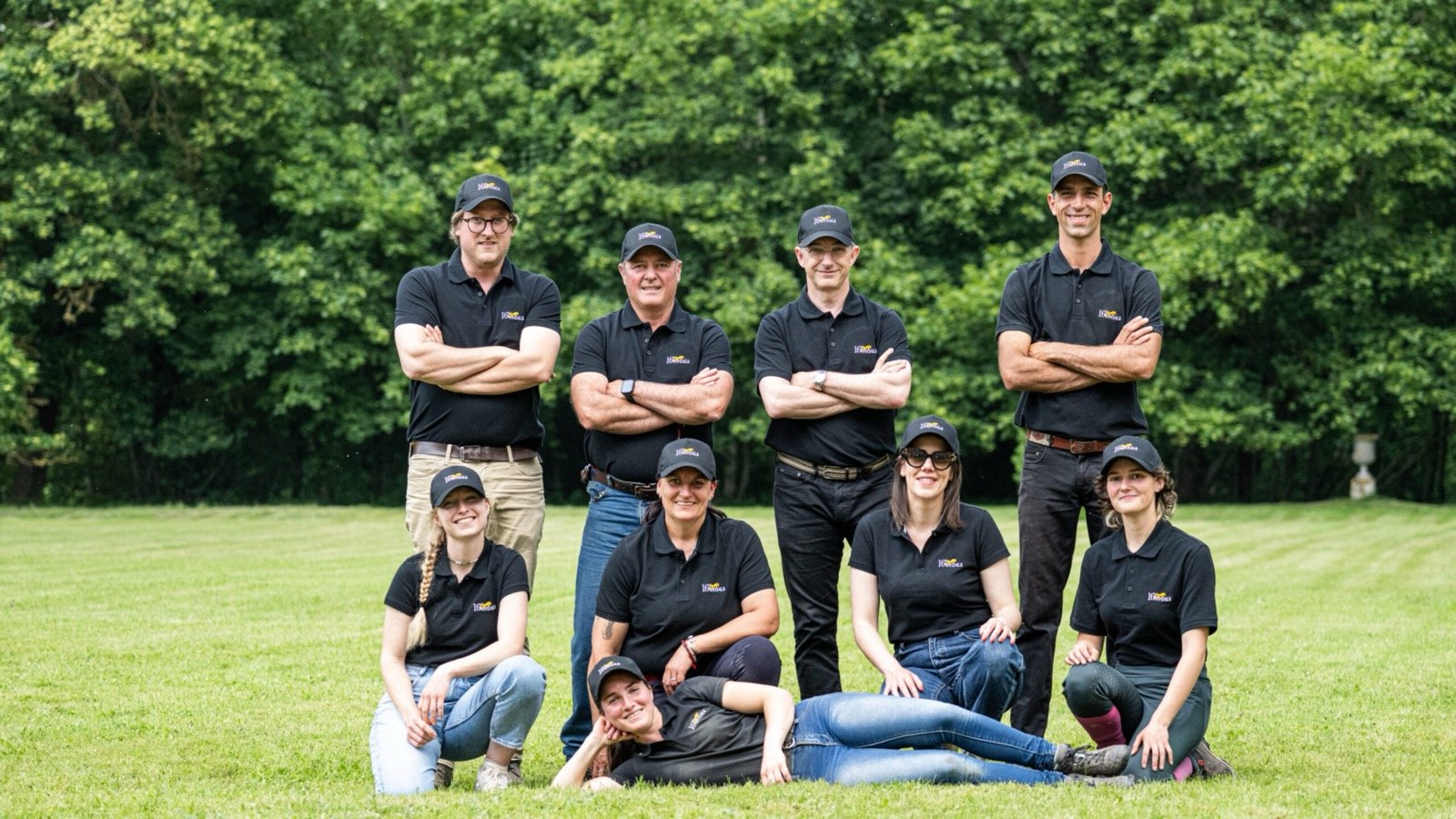

160Foals is the most selective foal auction in the world, and every foal in it is built on a proven 1.60m dam line. This is how that standard was set, and why the dam decides everything.
The biggest stallion names, the most fashionable bloodlines, the sires that fill every catalogue. That is the language most foal auctions speak. 160Foals, founded by Benoit Dulac in Normandy, took the opposite road: it is the first foal auction assembled entirely around proven 1.60m dam lines. Where other auctions sell hope, 160Foals sells proof.
A philosophy of probability
"At its core, breeding is not a matter of certainty. It is a matter of mastering probabilities," says Dulac. That single sentence is the whole philosophy. You cannot guarantee that a foal will reach the top of the sport. You can choose families that have already produced horses who did, and in doing so you change the odds. It is why the brand looks backwards, into results that have already happened, rather than forwards into promises. "Breeding better is not enough. You need to breed differently," Dulac says, and the families he selects are described in the same plain terms: "These are not promising mares. They are proven families."
Why the dam line
The case for the mare is data, not sentiment. Genetic research places the maternal contribution at roughly the same weight as the sire, a 55/45 split the industry has long underused. A stallion can cover hundreds of mares a year. A mare produces a handful of foals in a lifetime, which makes her record far harder to fake and far more telling. 160Foals reads the family from the bottom up.
The dam by numbers
The numbers explain the urgency. Of all the foals bred for show jumping in Europe, roughly 2% ever reach 1.60m, the height of a Grand Prix. Breed from the top 200 stallions in the world and that figure rises to about 9%, the ceiling of conventional thinking. Select on a proven 1.60m dam line, and between 35% and 45% of those foals reach the level. The same investment, a different outcome.
The cost is the same
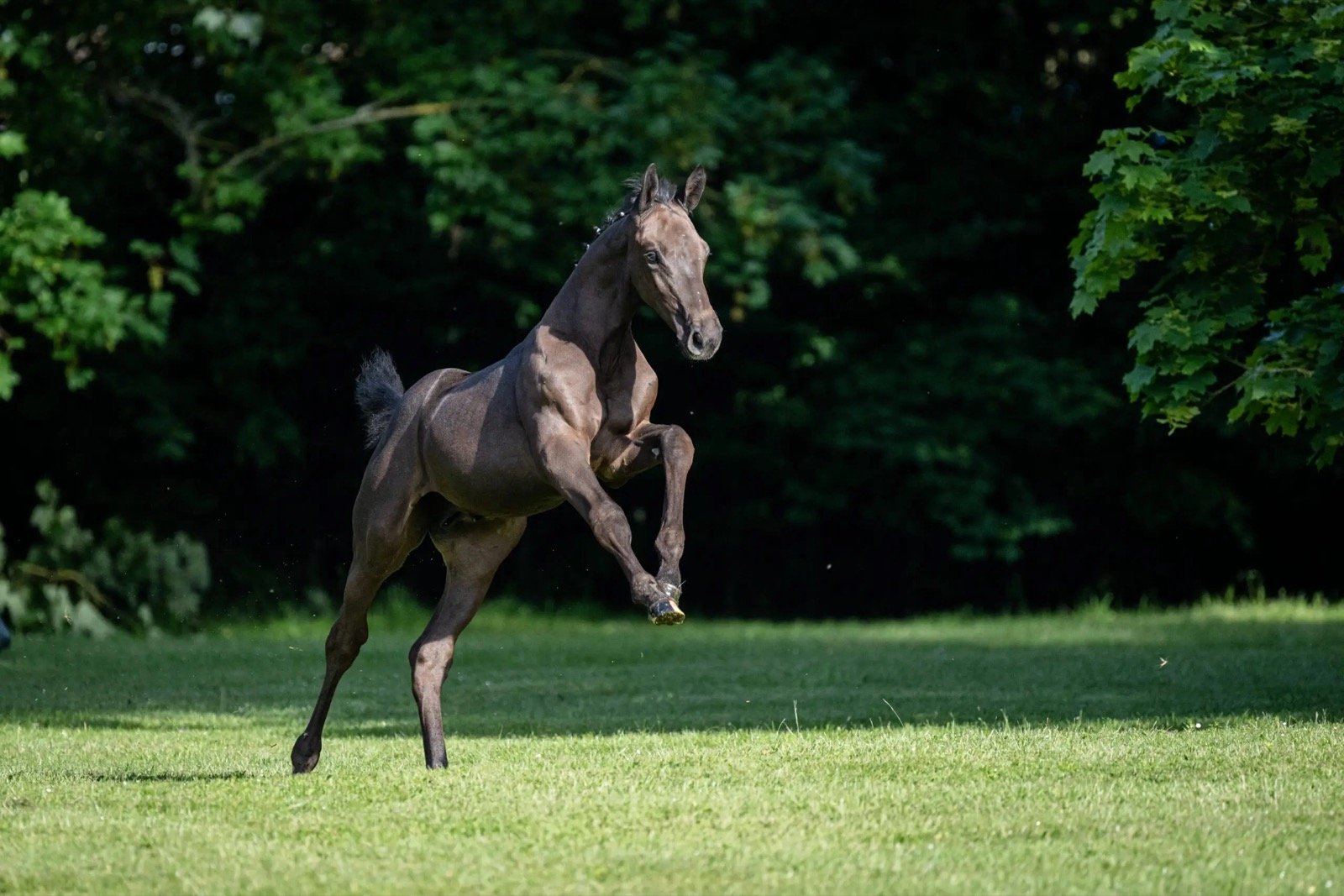
There is an economic logic underneath the breeding logic. It costs in the region of €160,000 to raise a foal to ten years of age, the point at which a jumper is competing seriously, and that figure is almost identical whether the horse reaches 1.60m or never leaves the lower classes. The cost is the same. The outcome is not. If the bill does not change, the one variable worth controlling is the family the foal comes from.
Three ways to qualify: J160, P160, F160
Every mare in the selection meets at least one of three criteria. A J160 mare has jumped 1.60m herself, a proven athlete in her own right; J160 families return horses to 1.60m at a rate of 38%. A P160 mare has already produced a 1.60m horse, her genetics validated by what she has passed on, and sits at 47%. An F160 mare is the full sister of a 1.60m horse, the same sire and the same dam, reaching 39%. Many mares qualify on more than one count.
These are not theoretical families. The 2026 selection includes Cacacha Van Het Schaeck, who has both jumped and produced at the level, and Ilusionata Van't Meulenhof, another double qualifier. Shakira De Kreisker combines P160 and F160. Oak's Grove Americana, Kalinka Van De Nachtegaele and RMF Zecilie all jumped 1.60m themselves, while Chawizza is the full sister of a 1.60m horse. Real names, real records. Every claim is checked against the Hippomundo database and partner studbook records, so no mare enters the selection without a verifiable 1.60m result behind her.
The proof of 2005
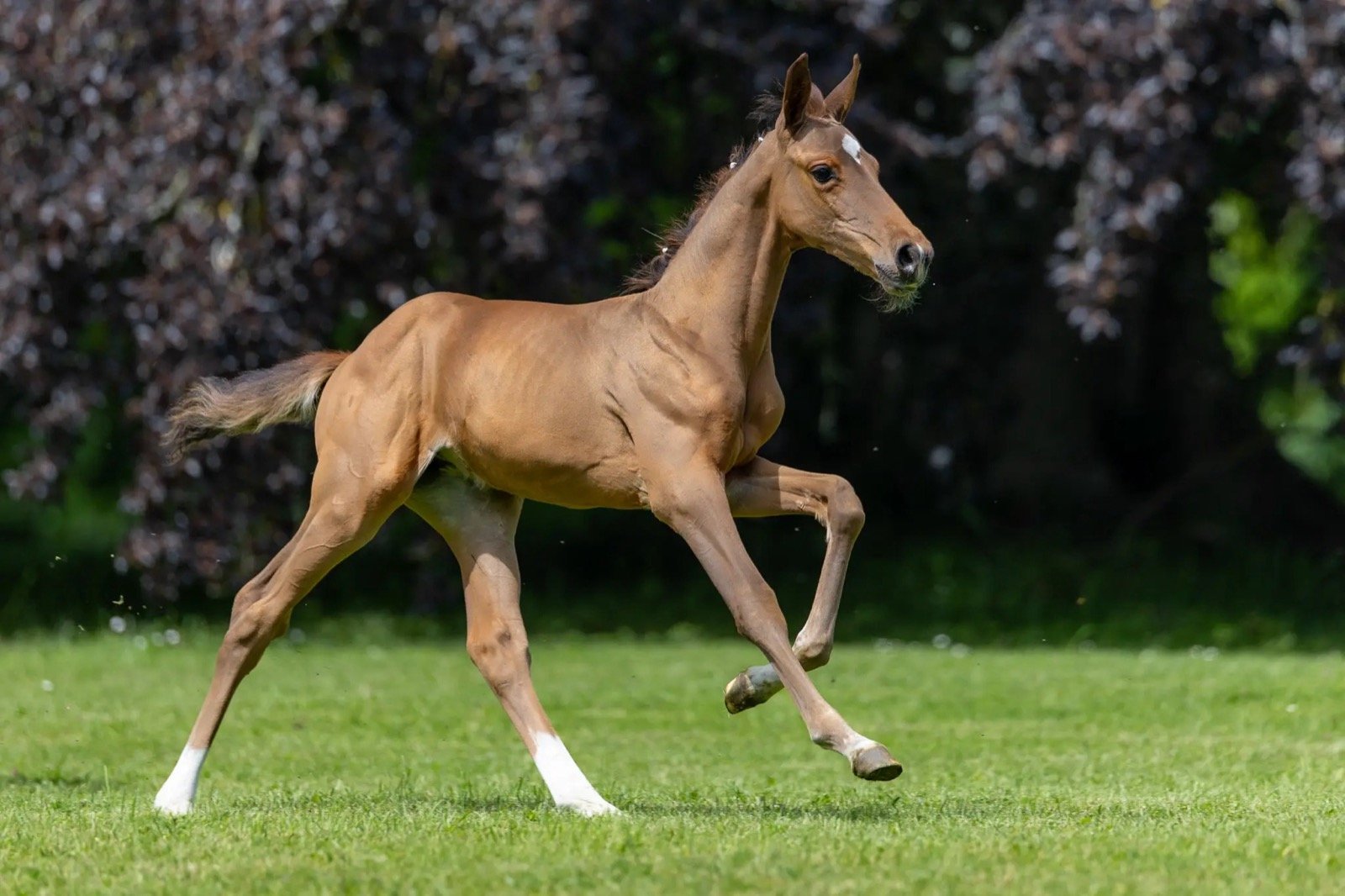
The clearest evidence comes from a single year. Of the 32,716 horses born in 2005, 720 reached 1.60m over the 21 years that followed. 285 of them were mares. Those mares produced 233 offspring that grew up, and 55 of those offspring reached 1.60m themselves. That is a 23% success rate, eleven times the 2% baseline of the sport and two and a half times the rate of the world's top 200 sires. 21 years later the data is complete. It can be counted, and it can be verified.
Backed by the best
The method has convinced people who have spent their lives at the top of the sport. Nina Mallevaey, ranked World No. 7 and the highest ranked female rider in the world, is drawn to the data behind the dam line. François Mathy Sr, Olympic bronze medallist and one of the most influential breeders and dealers of Grand Prix horses, has reached the same conclusion across a career: the depth of the dam line is the strongest predictor of greatness.
The auction
The first 160Foals collection goes to auction on 30 June 2026 at 8:00 pm CET, live and online, open to serious buyers in any time zone. Registration runs through the 160 Circle. The foals are young. The families are proven. That is the entire point.